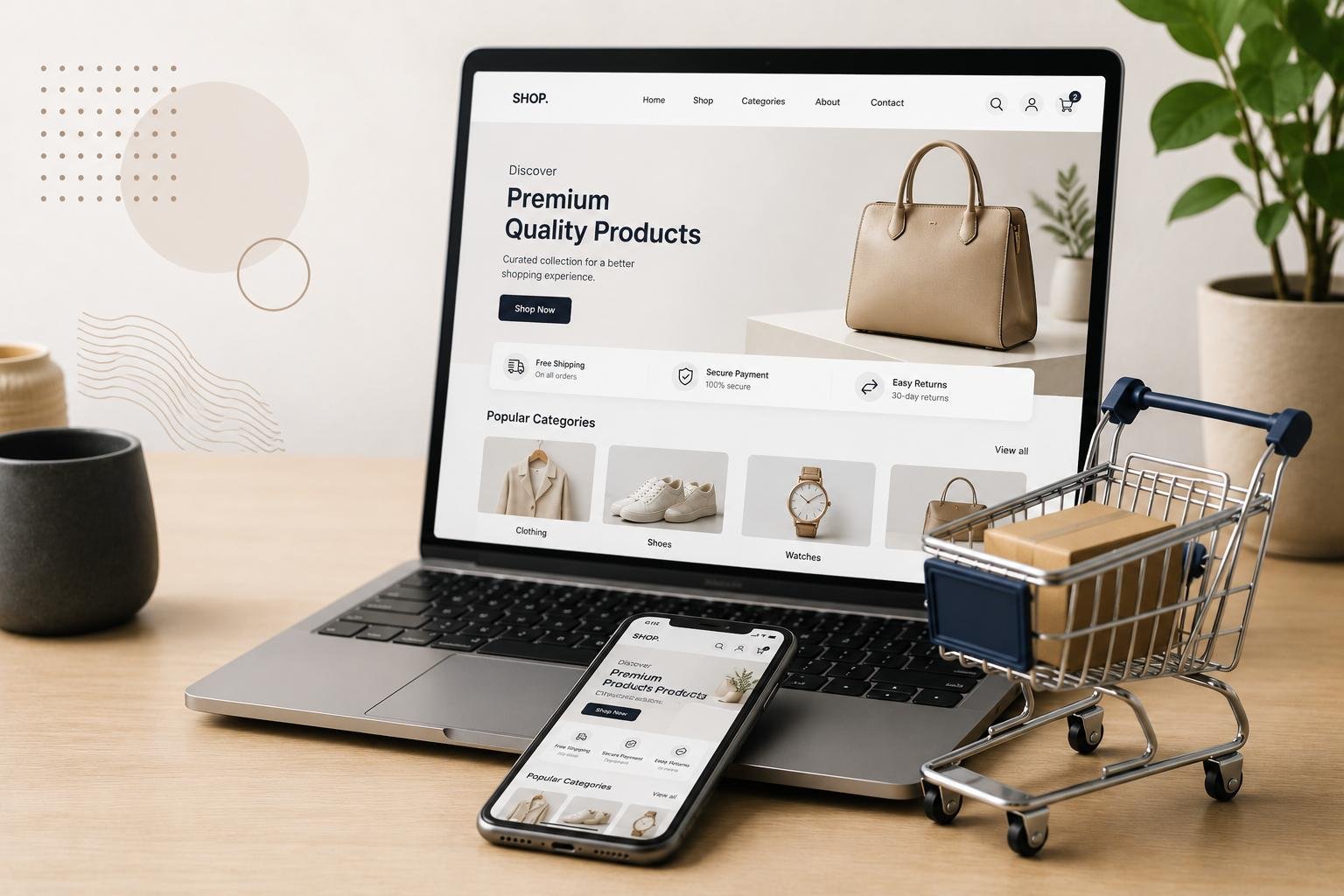
How to Build an Ecommerce Website in India – Complete Guide for Businesses
How to Build an Ecommerce Website in India – Complete Guide for Businesses
Online shopping has become an important part of the modern business environment. Customers increasingly prefer browsing products, comparing prices and placing orders through websites. For businesses, an ecommerce website creates an opportunity to reach customers beyond their local market and sell products online.
Whether you are starting a new online business, running a retail store or planning to expand your existing brand, building a professional ecommerce website can help you establish your digital presence.
In this guide, we will explore how to build an ecommerce website in India, the essential features you should consider and how the right website development approach can support your online business.
What Is an Ecommerce Website?
An ecommerce website is an online platform that allows businesses to display products, accept orders and sell goods or services through the internet.
Customers can visit the website, explore product categories, view product details, add items to their shopping cart and complete purchases through available payment options.
An ecommerce website can be developed for different business models, including:
- Fashion and clothing stores
- Electronics and accessories businesses
- Beauty and skincare brands
- Home decor and furniture stores
- Food and grocery businesses
- Handmade and handicraft product sellers
- Wholesale and retail businesses
Why Does Your Business Need an Ecommerce Website?
Selling products through an ecommerce website gives businesses greater control over their online shopping experience.
Here are some important benefits:
1. Reach More Customers
A website allows your business to showcase products to customers across different cities and regions, subject to your delivery capabilities.
2. Sell Products 24/7
Customers can browse your products and place orders at any time without depending on physical store opening hours.
3. Build Your Brand Identity
A professionally designed ecommerce website gives your business its own digital identity, including branding, product presentation and customer communication.
4. Manage Products and Orders
An ecommerce admin panel can help you manage product information, inventory, customer orders and website content from one place.
5. Provide Convenient Shopping
Features such as product filters, shopping carts, secure checkout and multiple payment options make the shopping experience easier for customers.
Essential Features of an Ecommerce Website
A successful ecommerce website needs more than attractive product images. It should provide a convenient shopping experience and useful management functionality.
1. Professional Homepage Design
The homepage introduces your online store and helps visitors discover important products, categories, promotional offers and business information.
2. Product Catalogue
A product catalogue allows customers to browse products through categories, images, descriptions, prices and other relevant details.
3. Product Search and Filters
Search functionality and filters help customers find products based on categories, price ranges, sizes, colours and other available attributes.
4. Shopping Cart
The shopping cart allows customers to add products, change quantities, remove items and review their order before checkout.
5. Secure Payment Gateway Integration
Payment gateway integration allows customers to make online payments through supported methods such as cards, UPI and net banking, depending on the payment provider.
6. Order Management System
An order management system helps administrators review orders, update order statuses and manage customer purchases.
7. Inventory Management
Inventory management helps businesses track available stock and update product quantities as orders are processed.
8. Customer Registration and Login
Customer accounts can provide access to order history, saved addresses, account details and other shopping-related features.
9. Mobile Responsive Design
Your ecommerce website should work properly on smartphones, tablets and desktop devices because customers may shop using different screen sizes.
10. Admin Dashboard
An admin dashboard allows the business owner or authorized team members to manage products, categories, orders, customers, banners and website content.
How to Build an Ecommerce Website in India?
Building an ecommerce website requires proper planning, design and development. The following steps can help you understand the process.
Step 1: Identify Your Business Requirements
Start by identifying the products you want to sell, your target customers, delivery locations and the features required for your online store.
Step 2: Select the Right Ecommerce Platform
Choose a suitable development platform based on your business requirements.
Common options include:
- WordPress with WooCommerce
- Custom PHP ecommerce development
- Laravel-based ecommerce development
- Other suitable ecommerce platforms
The right option depends on your required features, customization needs and future plans.
Step 3: Plan Website Design and Structure
Prepare the main website pages, including:
- Home
- Shop
- Product Details
- Product Categories
- About Us
- Contact Us
- Cart
- Checkout
- My Account
- Privacy Policy
- Terms and Conditions
- Shipping and Return Policy
Step 4: Add Products and Categories
Add product images, descriptions, prices, available variations and stock information. Organize products into categories to make browsing easier.
Step 5: Integrate Payment Gateway
Choose a suitable payment provider and complete its required business verification and integration process. Test the payment flow before launching the website.
Step 6: Configure Shipping and Delivery
Set up shipping rules, delivery charges, serviceable locations and order fulfilment processes according to your business model.
Step 7: Test the Website
Before launching, test product pages, cart functionality, checkout, payment processing, forms, mobile responsiveness and order management.
Step 8: Launch and Promote Your Online Store
After successful testing, launch your website and start promoting it through SEO, social media, digital advertising and other suitable marketing channels.
Ecommerce Website Development: WordPress vs Custom Development
Choosing the right development approach is important for your online store.
WordPress Ecommerce Development
WordPress with WooCommerce is a suitable option for many small and medium-sized businesses.
It offers product management, shopping cart functionality, order management and extensions for additional features.
Custom Ecommerce Website Development
Custom development is useful when a business requires specific functionality, customized workflows, advanced integrations or greater control over the website architecture.
A custom ecommerce platform can be developed around the business's operational requirements.
The best option depends on your product range, business processes, budget and long-term goals.
Important SEO Practices for Ecommerce Websites
Search engine optimization can help customers discover your products through relevant search queries.
Consider these essential practices:
- Write unique product titles and descriptions.
- Create SEO-friendly product and category URLs.
- Add descriptive image alt text.
- Optimize product images for faster loading.
- Use relevant title tags and meta descriptions.
- Create useful category descriptions.
- Add internal links between related products and categories.
- Maintain a logical website structure.
- Use canonical URLs correctly.
- Submit an XML sitemap to Google Search Console.
SEO takes time and results depend on competition, website quality, content and other ranking factors.
Common Ecommerce Website Development Mistakes to Avoid
Avoiding common mistakes can improve the shopping experience and make website management easier.
- Using low-quality or incomplete product images.
- Creating complicated checkout processes.
- Ignoring mobile responsiveness.
- Not displaying clear shipping and return information.
- Using duplicate product descriptions.
- Ignoring website loading speed.
- Not testing payment and order functionality.
- Failing to maintain website security and backups.
Why Choose Webscrew for Ecommerce Website Development?
Webscrew provides website design and development solutions for businesses looking to establish or improve their online presence.
We understand that every ecommerce business has different requirements. Our approach focuses on developing practical website solutions based on your products, customers and business operations.
Our ecommerce development services can include:
- Professional ecommerce website design
- WordPress and WooCommerce development
- Custom ecommerce website development
- Product and category management
- Shopping cart and checkout functionality
- Payment gateway integration
- Order and inventory management
- Responsive website development
- SEO-friendly website structure
- Website maintenance and technical support
Whether you are launching a new online store or planning to upgrade an existing ecommerce platform, Webscrew can help you plan a suitable development solution.
Start Your Online Store with Webscrew
A professional ecommerce website can help your business present products online, manage customer orders and create a convenient shopping experience.
The right website structure, useful features and customer-friendly design are important for building a reliable online store.
If you are planning to build an ecommerce website in India, connect with Webscrew to discuss your requirements and explore suitable ecommerce development solutions.